TOOLS WE LOVE ➜
Reverse Sear Ribeye Steak
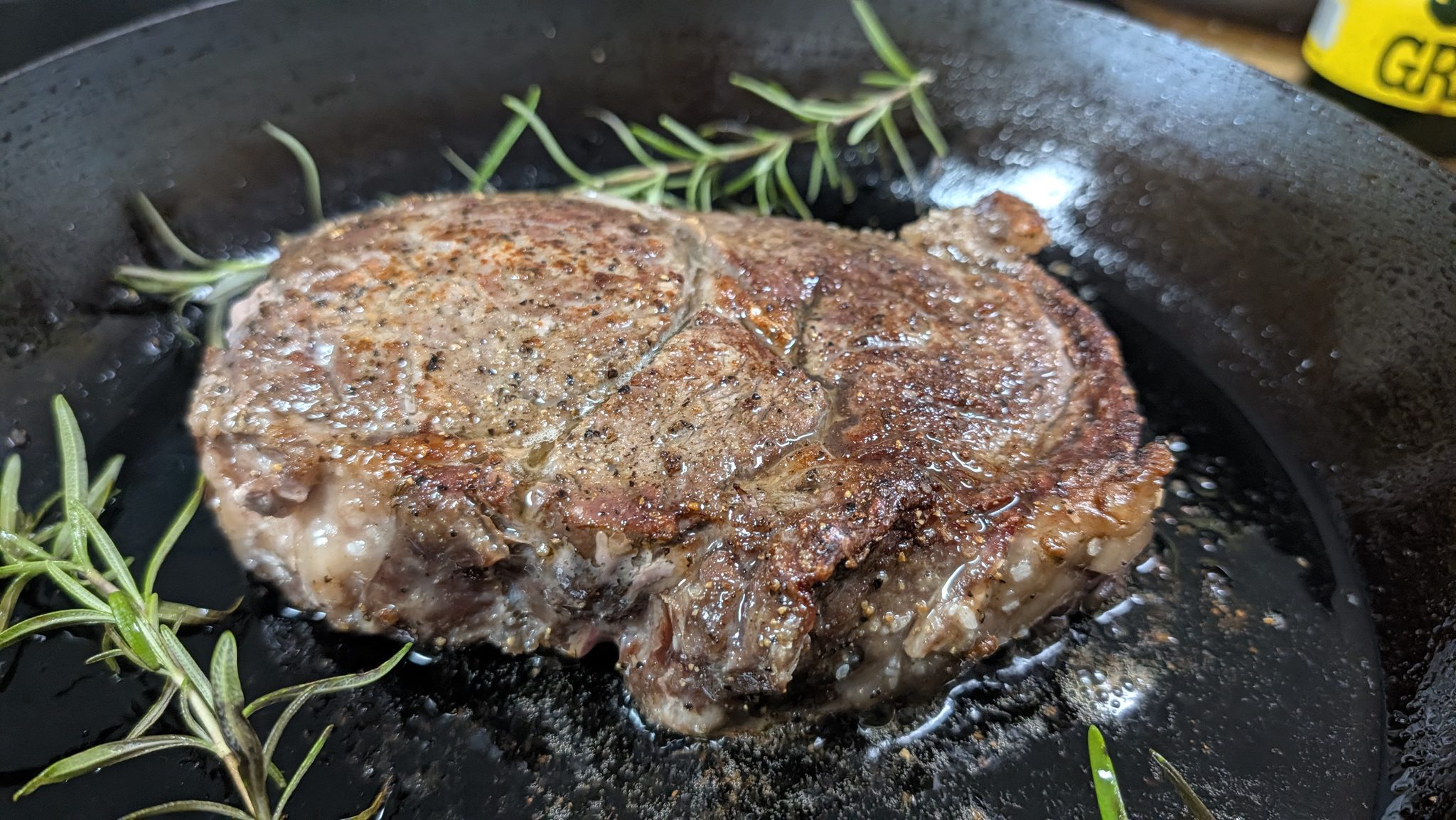
There’s nothing quite like a thick, juicy ribeye with a beautiful crust and a perfectly pink center. But cooking a 2-inch steak can be tricky. Sear it too long, and the outside burns before the middle is done. Cook it too gently, and you miss out on that delicious steakhouse crust.
That’s where the reverse sear method comes in!
Instead of searing the steak first, you cook it slowly in the oven at a low temperature, then finish it in a screaming-hot cast iron skillet. The result is an evenly cooked ribeye with a gorgeous browned crust and very little overcooked meat around the edges.
I love using this method for thick steaks because it’s easy to control the temperature. And since I already love cooking with cast iron, it’s a natural combination. I have perfected it for a tomahawk and a sirloin! It has become my ‘go to’ method when I am cooking inside.
If you’ve ever been nervous about cooking an expensive, thick-cut ribeye, this method takes most of the guesswork out of it. All you really need is a good thermometer!
Tips for the Perfect Reverse Sear Ribeye
- Choose a thick steak. Reverse searing works especially well with ribeyes that are 1½–2 inches thick. Thinner steaks can overcook during the final sear.
- Dry the steak thoroughly. Moisture prevents a good crust. Pat the ribeye dry before seasoning and again before searing if needed.
- Use a wire rack. Elevating the steak over a baking sheet allows warm air to circulate for more even cooking.
- Don’t skip the thermometer. A few degrees can make a big difference, especially with an expensive cut of beef.
- Get the cast iron HOT. The goal is to develop a deep brown crust quickly without continuing to cook the center.
- Use a high-smoke-point oil. Avocado oil works beautifully for the final sear.
- Add butter at the end. Butter burns easily in a very hot skillet. Wait until the final 30 seconds to add it with garlic and rosemary.
- Don’t forget the edges. A thick ribeye often has a generous fat cap. Hold the steak on its side with tongs to brown that fat.
- Watch the final temperature. The steak will continue cooking during the sear, so remove it from the oven before it reaches your desired final temperature.
Reverse Sear Ribeye Temperature Guide
| Doneness | Remove from oven | Final target |
|---|---|---|
| Rare | 105–110°F | 120–125°F |
| Medium-Rare | 115–120°F | 130–135°F |
| Medium | 125–130°F | 140–145°F |
| Medium-Well | 135–140°F | 150–155°F |
These temperatures are approximate. The final sear can raise the internal temperature by 5–15°F depending on skillet heat, steak thickness, and searing time.
For food safety, USDA recommends cooking whole beef steaks to 145°F followed by a 3-minute rest.

Ingredients
Method
- Preheat oven to 250°F. Pat ribeye dry and season generously with salt and pepper.
- Place steak on a wire rack over a baking sheet. Insert an oven-safe meat thermometer into the thickest part.
- Cook until the internal temperature reaches 115–120°F for medium-rare, approximately 35–55 minutes depending on thickness.
- Remove steak from oven. Heat a cast iron skillet over medium-high to high heat until very hot.
- Add avocado oil, then carefully place the steak in the skillet.
- Sear for 45–60 seconds per side until a deep brown crust forms.
- Hold steak with tongs and sear the fatty edges for 20–30 seconds.
- During the final 30 seconds, add butter, garlic, and rosemary. Spoon melted butter over the steak.
- Remove from skillet, rest approximately 5 minutes, and slice against the grain.