
TOOLS WE LOVE ➜
Homemade Seafood Stock (Using Leftover Shrimp, Crab & Lobster Shells)
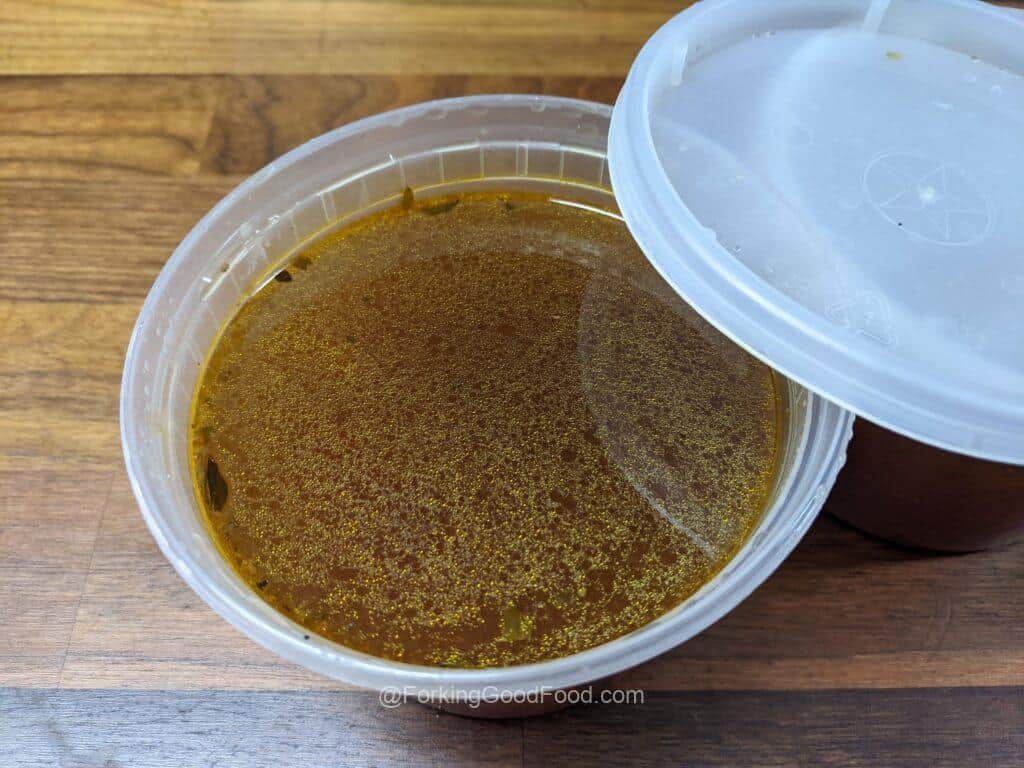
It’s seafood stock day at my house! I don’t make it every time we have shrimp, crab, or lobster. Instead, I toss all those leftover shells into freezer bags, along with onion ends, carrot scraps, celery pieces, and whatever other vegetables I’ve been saving. Once I’ve collected enough, it’s time to make a big batch of homemade seafood stock to stash in the freezer.
And here’s the part that makes all the difference: I roast everything in the oven first. The shells get nice and fragrant, the vegetables start to caramelize, and all that roasting adds a deeper, richer flavor to the finished stock. After that, everything goes into the Instant Pot or a big Dutch oven to simmer away.
It’s one of my favorite ways to use up kitchen scraps instead of throwing them away. Plus, homemade seafood stock tastes so much better than most of the stuff you buy at the grocery store, and it’s practically free when you’re using ingredients you’ve already paid for!
What I Save for Homemade Seafood Stock
I keep freezer bags specifically for seafood shells and vegetable scraps. There’s no need to make stock every time you peel a pound of shrimp. Just keep adding to your collection until you have enough to make a worthwhile batch.
- Shrimp shells and tails: Probably what I save the most, and they make a wonderful stock.
- Crab and lobster shells: Great for adding extra richness and seafood flavor.
- Crawfish shells: Perfect for stock you’ll use in gumbo or other Cajun dishes.
- Onion scraps: Ends, outer layers, and leftover pieces, as long as they’re clean.
- Carrot scraps: Peelings, ends, and pieces left over from cooking.
- Celery scraps: Tops, leaves, and ends all work beautifully.
- Garlic: Leftover cloves or clean garlic scraps add another layer of flavor.
One thing I avoid is throwing absolutely everything into the bag. Broccoli, cabbage, Brussels sprouts, and other strong-flavored vegetables can make stock bitter or overpower the seafood. I also skip anything spoiled, heavily seasoned, or covered in sauce.
What NOT to Put in Homemade Seafood Stock
Not every kitchen scrap belongs in seafood stock! Skip oyster, clam, and mussel shells, which don’t contribute much flavor and can bring along grit or sand. I also avoid fish guts, gills, and anything with a strong fishy smell, along with shells that have been sitting out too long or are covered in heavy seasoning or sauces.
For vegetables, stay away from broccoli, cabbage, Brussels sprouts, cauliflower, and turnips, which can make your stock bitter or overpower the delicate seafood flavor. Potatoes can make it cloudy and starchy, while beets can turn the whole batch an interesting shade of pink! Stick with clean onion, carrot, celery, and garlic scraps for the best results.
Why I Roast the Shells and Vegetables First
You can certainly make seafood stock without roasting anything, but I think that extra step is worth it. Roasting brings out the natural sweetness in the vegetables and develops a deeper flavor in the shells, giving the finished stock a richness you don’t get from simply boiling everything.
I spread the shells and vegetable scraps across a large roasting pan or baking sheet, then roast them at about 400°F until everything is fragrant and lightly browned, usually around 20–30 minutes. Keep an eye on the smaller shells and vegetables so they don’t burn. You want roasted flavor, not charred seafood!
Don’t forget all those browned bits left on the pan, either. A little water or white wine can help loosen them so you can pour that extra flavor right into your stock pot.
Making Seafood Stock in the Instant Pot
The Instant Pot is my favorite option when I want to get everything finished without babysitting a pot on the stove. Once the shells and vegetables are roasted, I transfer them to the Instant Pot, add the remaining ingredients and enough water to cover, staying below the maximum fill line, and let the pressure cooker do the work.
For a typical batch, about 20–30 minutes on high pressure is plenty, followed by a natural pressure release. Seafood shells give up their flavor much faster than beef or chicken bones, so there’s no reason to pressure cook them for hours.
Making Seafood Stock in a Dutch Oven
If I’m not using the Instant Pot, my Dutch oven works just as well. After roasting, I add everything to the pot, pour in the water and any additional ingredients, and bring it to a gentle simmer.
I usually let it simmer gently for about 45 minutes to an hour, skimming off any foam that rises to the surface. You don’t need a rolling boil, and cooking seafood stock all afternoon isn’t necessarily better. A gentle simmer extracts plenty of flavor without making the stock overly strong or bitter.
My Tips for the Best Homemade Seafood Stock
- Save scraps as you go. Keep freezer bags handy so you can collect enough shells and vegetables for a big batch. When chopping onions, celery, and carrots keep the scraps. They are perfect for this!
- Roast before cooking. This is my favorite trick for getting a deeper, richer seafood flavor.
- Mix different shells. Shrimp, crab, lobster, and crawfish shells can all go into the same batch.
- Don’t overdo the water. Add enough to cover the ingredients without unnecessarily diluting the flavor.
- Try a splash of dry white wine. It’s optional, but it adds a nice little something to the finished stock.
- Go easy on the salt. I prefer seasoning the dish I’m making later, especially if the stock will be reduced.
- Strain carefully. Use a fine-mesh strainer, and cheesecloth if necessary, to remove tiny shell fragments.
- Freeze in useful portions. A few 1-cup containers are much easier to use than one giant frozen block of stock.
What Can You Make with Homemade Seafood Stock?
This is why I love having several containers tucked away in the freezer. When I’m making recipes with seafood, I already have a flavorful base ready to go. No last-minute trip to the grocery store for a carton of seafood broth!
It’s also wonderful for cooking rice, making seafood pasta sauces, or adding extra flavor to shrimp and corn soup. Even a small amount can make a big difference in a recipe, which is why I like freezing some in smaller portions.
How to Store and Freeze Seafood Stock
Once the stock is finished, I strain out all the shells and vegetables and cool it quickly before storing. Divide a big batch into shallow containers or use an ice bath to cool it safely rather than leaving a huge pot sitting on the counter for hours.
Keep homemade seafood stock refrigerated for up to 2 days, or freeze it for up to 3 months for the best quality. I like freezing mine in 1-cup or 2-cup portions so I can grab exactly what I need. Just remember to leave a little room for expansion in your freezer-safe containers.
And that’s it! A little freezer space, a roasting pan, and some scraps that would normally end up in the trash turn into a freezer full of homemade seafood stock. It’s one of those simple kitchen habits that saves money and makes everything you cook with it taste better.
Homemade Seafood Stock Recipe
Here’s the recipe card for making your own batch. Whether you use the Instant Pot or Dutch oven, don’t skip roasting those shells and vegetables first!

Instant Pot Homemade Seafood Stock
Turn leftover shrimp, crab, or lobster shells into rich homemade seafood stock in your Instant Pot. Perfect for gumbo, bisque, chowder, and more.
Ingredients
Equipment
Method
- Select Sauté and add olive oil.
- Sauté shells, onion, carrot and celery for 15 minutes until lightly browned.
- Add garlic and cook 2 minutes.
- Add wine, scrape pot bottom, then add water, tomato paste, salt, pepper and thyme.
- Seal lid and pressure cook on High for 5 minutes.
- Natural release 10 minutes, then carefully release remaining pressure.
- Remove solids and strain through fine mesh lined with cheesecloth.
- Cool promptly and refrigerate or freeze.
Notes
For a slower method, use the Slow Cook setting and simmer for several hours, following your appliance’s slow-cooking instructions. Taste before adding additional salt, especially if using the stock in a reduced sauce.
When chopping onions, celery, and carrots keep the scraps. They are perfect for this!


